
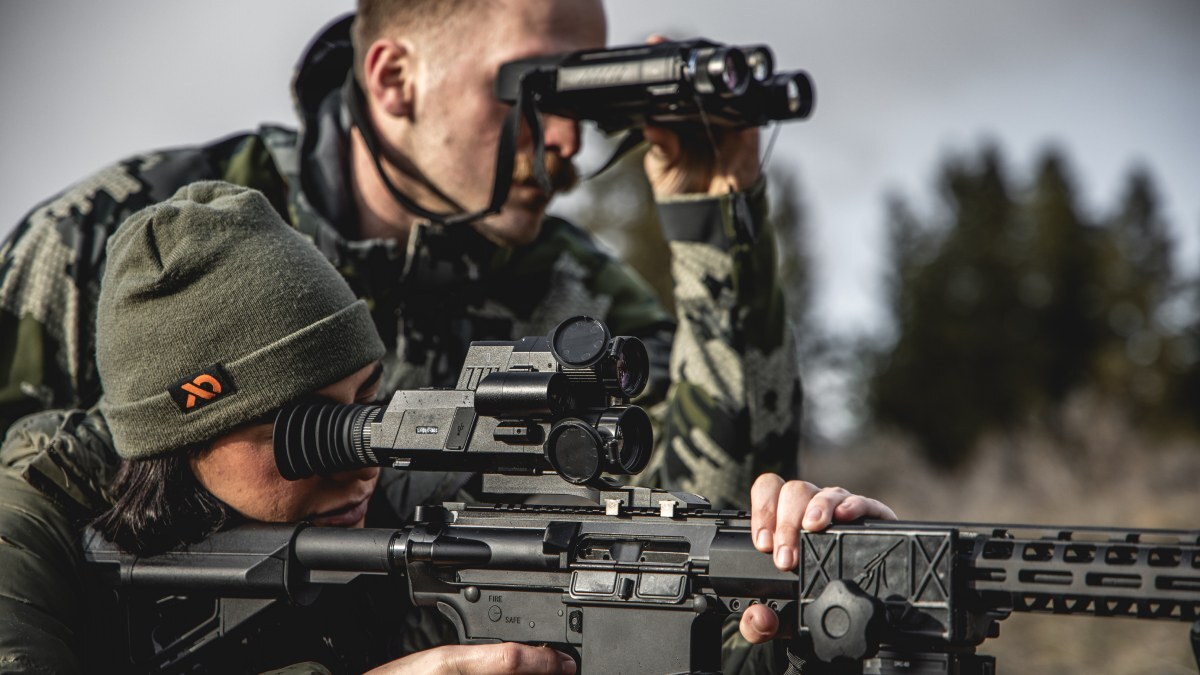
The no-BS comparison guide to choosing the right tech for the way you hunt, scan, and shoot.
If you’re shopping optics and everything starts sounding the same—detect, identify, clarity, range—this guide is for you. Thermal, night vision, and multispectral aren’t “better vs worse.” They’re different tools that win in different conditions. Pick the right one and you’ll feel like you leveled up overnight. Pick the wrong one and you’ll fight your optic the whole season.
Here’s how each works, what it’s best at, and how to choose fast.
Quick definitions
Thermal (IR / heat)
Sees temperature differences. Warm targets “pop” against cooler backgrounds.
Night Vision (digital or analog)
Amplifies available light (moon/starlight/ambient). You see a more natural image of the world.
Multispectral
Combines thermal + night vision (or fuses them in software) so you can see heat + detail together.
The 30-second answer
- If you want the fastest target finding: get Thermal.
- If you want the most natural image and detail: get Night Vision.
- If you want “best of both” and can spend more: get Multispectral.
What each technology is best at
Thermal: best for detection + scanning fast
Thermal is the king of finding animals/people quickly—especially in brush, uneven terrain, or total darkness. Heat signatures are hard to hide. That’s why thermal is usually the first “serious upgrade” people make.
Thermal wins when:
- You’re scanning big areas and want targets to “pop”
- It’s pitch-black, overcast, or no-moon
- The background is messy (brush, shadows, thick terrain)
- You’re hunting hogs/coyotes and speed matters
Thermal struggles when:
- You need fine visual details (exact species, antlers, gear, facial features)
- The environment reduces contrast (heavy fog, high humidity, warm ground at sunset)
- You’re looking through glass (most glass blocks thermal)
Night Vision: best for detail + natural viewing
Night vision gives you a more traditional view—shapes, textures, terrain detail, fences, branches, and what you’re actually looking at. It’s often easier for navigation and spotting smaller visual cues.
Night vision wins when:
- You need detail for identification (animal features, terrain, objects)
- You’re moving and navigating (walking, driving slowly, setting up)
- Conditions have usable ambient light (moon/stars/IR illuminator)
- You want a more daytime-like workflow
Night vision struggles when:
- The night is truly dark without added IR
- You’re scanning huge areas and need fast target pop
- Targets are partially obscured and blend into the environment
Multispectral: best overall versatility (and the most expensive)
Multispectral systems combine thermal’s target detection with night vision’s detail. In the real world, that means you can detect fast, then confirm/identify with confidence—often without switching devices.
Multispectral wins when:
- You want one platform to handle detection + identification
- You operate across mixed conditions (open fields + timber + structures)
- You need higher confidence before acting (tactical, pro, or high-stakes hunting)
Multispectral struggles when:
- Budget matters (it’s typically the priciest category)
- You want the lightest, simplest setup (more tech = more settings)
Side-by-side comparison
Target detection (finding heat):
Thermal: █████
Night vision: ██░░░
Multispectral: █████
Identification (seeing detail):
Thermal: ███░░
Night vision: ████░
Multispectral: █████
Navigation / terrain awareness:
Thermal: ███░░
Night vision: █████
Multispectral: ████░
Works in absolute darkness:
Thermal: █████
Night vision: ███░░ (improves with IR illuminator)
Multispectral: █████
Performance in fog/humidity:
Thermal: ██░░░ (varies)
Night vision: ████░
Multispectral: ████░
Learning curve:
Thermal: ███░░
Night vision: ██░░░
Multispectral: ████░
Best use-case picks
Predator + hog hunting
- Open fields / quick scanning: Thermal first
- Need detail or calling close-in: Thermal + NV (or multispectral)
Property surveillance / nuisance animals
- Thermal for fast detection around buildings/treelines
- Add NV if you need detail at gates, doors, vehicles, equipment
Navigation at night (walking, ATV, ranch work)
- Night vision is typically the most comfortable and natural
- Thermal is great as a scanner, but NV is often easier for movement
One optic to rule them all
- Multispectral if you want fewer compromises and can swing the cost
How to choose in 3 questions
1) Do you need to FIND targets fast or CONFIRM detail?
- Find fast: Thermal
- Confirm detail: Night vision
- Both without switching: Multispectral
2) What are your typical conditions?
- No-moon / heavy shadow / lots of brush: Thermal advantage
- Clear nights / you move a lot / need terrain detail: Night vision advantage
- Mixed conditions: Multispectral advantage
3) What matters more—simplicity or capability?
- Simpler, fewer settings: Night vision
- Fast scanning capability: Thermal
- Most capability (more controls): Multispectral
Common mistakes buyers make
Mistake #1: Buying thermal for identification first.
Thermal is amazing for detection, but if you need fine detail regularly, plan for a higher-res thermal, an LRF, or a dual-sensor solution.
Mistake #2: Expecting night vision to pop targets like thermal.
NV is detail-oriented. Thermal is detection-oriented. They don’t feel the same in the field.
Mistake #3: Ignoring real-world environment.
Humidity, fog, and warm ground can reduce thermal contrast. Moonlight and IR illumination can transform night vision.
Bottom line
Thermal = fastest detection and scanning.
Night vision = best detail and natural viewing.
Multispectral = highest confidence across conditions.
If you tell me your typical terrain (open fields vs timber), target (hogs/coyotes/etc.), and whether you’re mostly scanning or moving, I’ll point you to the most sensible pick—and what specs matter most for that choice.
Recommended PARD setups (based on how you actually use the optic)
1) Fast scanning + fast decisions (best for hogs/coyotes)
Pick: Thermal
Why it fits: Thermal is the fastest way to find targets that are hiding, moving, or partially obscured.
PARD match: Pantera series thermal scopes (example: Pantera eX 640 if you want higher detail and confident ID at distance).
Best for: open fields, mixed cover, quick scanning, spot-and-stalk, calling setups.
2) Detail-first viewing (best for terrain detail, identification, and a “natural” image)
Pick: Night Vision
Why it fits: Night vision shows the world more like your eyes expect—shapes, textures, branches, fences, and terrain features.
PARD match: Night Stalker 4K 2.0 (great fit when you want crisp detail and a modern night-vision workflow).
Best for: navigating property, watching lanes/trails, identifying what you’re seeing before you act.
3) “One device” versatility (best when you want detection + confirmation in one platform)
Pick: Multispectral
Why it fits: Multispectral/fusion setups are built for the real-world problem: detect quickly (thermal) and confirm detail(night vision) without switching tools.
PARD match:
Best for: mixed terrain, varied conditions, higher-stakes use, users who don’t want to juggle multiple devices.
4) Keep your daytime optic (best if you already love your scope and just want night capability)
Pick: Clip-on
Why it fits: Clip-ons let you keep your existing zeroed daytime scope and add night capability when needed.
PARD match: Explore Thermal Clip-On and Night Vision Clip-On options by category.
Best for: shooters who want to preserve their daytime setup, familiar reticle/eye relief, and a simple transition.
Shop by technology
Shop by Technology:
- Thermal Scopes – Fast detection, great for scanning and hunting at night
- Night Vision Scopes – Natural detail for identification and navigation
- Multi-Spectral – Thermal + NV capability in one platform