
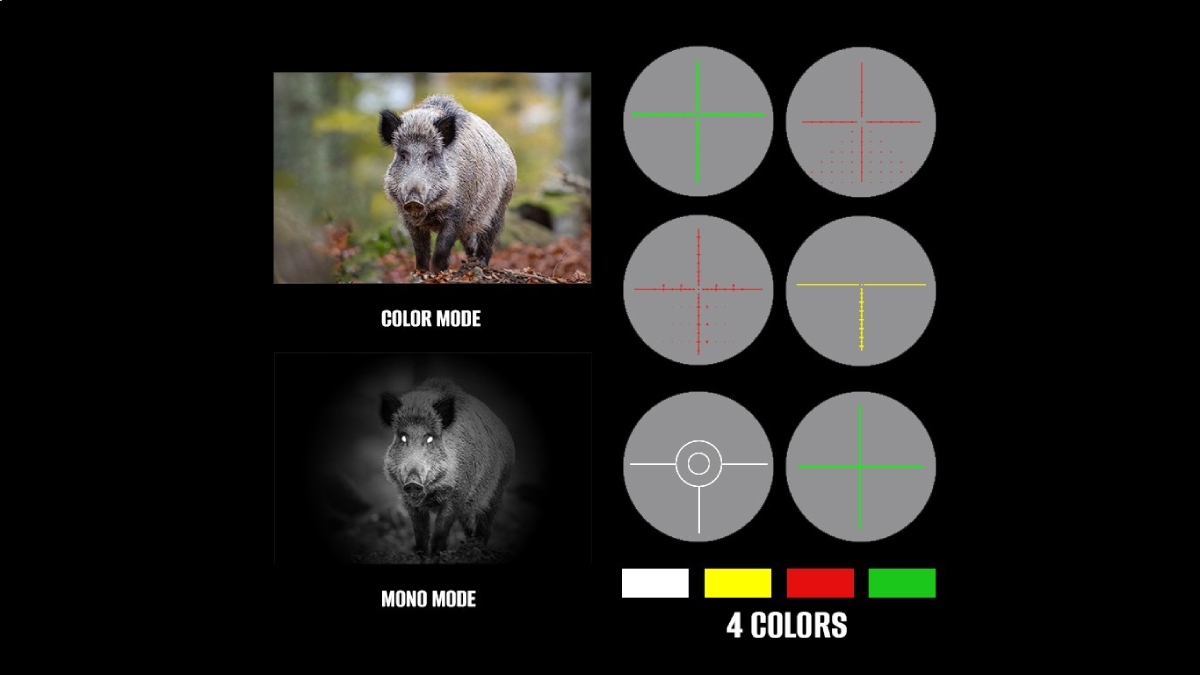
Night vision specs get thrown around like marketing bait — 4K sensors, invisible IR, ballistic calculators, laser rangefinders.
But here’s the reality:
Night vision performance isn’t about the longest feature list.
It’s about image clarity, illumination quality, and how the system behaves once the sun disappears.
This guide breaks down what modern digital night vision actually is, what 4K really means, how IR works, when LRF matters, and how to choose the right setup for your terrain and typical distance.
What Modern Digital Night Vision Actually Is
Traditional “green phosphor” night vision relied on analog image intensifier tubes.
Modern systems — like those from PARD USA — use digital CMOS sensors instead.
That changes everything.
Digital night vision:
- Uses a camera-style sensor
- Displays the image on a micro screen
- Records video and photos
- Works in full color during the day
- Uses infrared illumination at night
This makes modern night vision more versatile than legacy tube systems — but it also means IR performance becomes critical.
What 4K Night Vision Actually Means
When you see “4K” in night vision, it refers to sensor resolution — typically 3840×2160 pixels.
More pixels means:
- Sharper base image
- Cleaner digital zoom
- Better target recognition
- Higher-quality recording
But resolution alone does not guarantee performance.
A 4K sensor with weak IR will struggle at distance.
A 4K sensor paired with strong, adjustable IR illumination performs dramatically better.
Resolution matters — but only when illumination supports it.
Check out our new Night Stalker 4K 2.0 Weapon Mounted Scope.
Infrared (IR) Illumination — The Hidden Performance Factor
Night vision does not see in the dark on its own.
It needs infrared light.
The IR illuminator projects invisible light forward. The sensor captures that reflected light and builds the image.
850nm IR
- Stronger output
- Better long-range performance
- Slight visible red glow at the emitter
940nm IR
- Virtually invisible to animals
- Slightly reduced effective range
For predator or hog hunters, IR strength and beam adjustability often matter more than raw resolution numbers.
Laser Rangefinder (LRF) — When It Actually Matters
An LRF measures exact distance to target.
It becomes valuable when:
- Shooting beyond 200–300 yards
- Using ballistic drop compensation
- Hunting open fields or western terrain
It matters less when:
- Hunting dense woods
- Shooting inside 150 yards
- Running a lightweight, minimal setup
LRF is a precision amplifier — not a necessity for every environment.
Digital Zoom vs Optical Zoom
Digital night vision primarily uses digital zoom.
Base magnification = best clarity
Digital zoom = cropped image
Higher-resolution sensors handle digital zoom significantly better.
A 4K system maintains usable detail when zoomed.
Lower-resolution systems degrade faster as zoom increases.
If you regularly shoot past 250 yards, sensor resolution becomes much more important.
Frame Rate and Image Processing
Two overlooked specs:
Frame Rate (Hz)
Higher refresh rates provide smoother tracking and better motion clarity.
Image Processing
Modern systems use algorithms to enhance contrast and reduce digital noise.
This is where premium systems separate from entry-level builds.
Real-world clarity is not just about pixel count — it’s about how those pixels are processed.
How to Choose the Right Night Vision Setup
If you hunt inside 150 yards:
- You don’t need 4K
- Strong IR matters more
- Lightweight builds are ideal
If you hunt 200–400 yards:
- Higher resolution becomes important
- Adjustable IR is critical
- LRF becomes valuable
If you record content:
- 4K sensors make a visible difference
- Clean processing and stable zoom matter
Specs should match terrain — not ego.
The Bottom Line
Modern night vision is a system — not a single spec.
Clarity = Sensor resolution + IR illumination + processing
Distance performance = IR strength + base magnification
Precision at range = LRF + ballistic support
Ignore the hype.
Match your optic to your terrain, typical distance, and shooting style.
That’s what actually matters.
FAQ Section
Is digital night vision as good as traditional?
Modern digital systems often provide higher resolution and more durability for civilian use.
Do you need IR for night vision?
Yes. Digital night vision requires infrared illumination to function effectively in complete darkness.
Is built-in LRF worth it?
For night hunting and longer distances, integrated LRF systems provide faster, more confident shot decisions.
Continue Your Research
If you're still deciding which optic fits your terrain and typical distance, these guides will help:
Thermal vs Night Vision Comparison Guide
Explore Thermal Imaging Scopes